Choose a stake
Use an amount already covered by a firm entertainment budget.
Place the stake before the timer ends, then decide whether to cash out before a Joker appears. The six-step walkthrough below separates base-game rules from the Vault bonus.
Bet before the countdown. Non-Joker cards raise the multiplier. Press Cash Out to accept the current amount. If a Joker lands first, the active bet crashes.
Use an amount already covered by a firm entertainment budget.
No new bets are accepted once the shared round begins.
Everyone follows the same card sequence and displayed multiplier.
Manual Cash Out acts now; Auto Cashout acts at a preset multiplier if reached.
Any Joker ends the base round for active bets.
Four of a Kind or Straight Flush can trigger Vault Break for those still in.
The stake field controls only the next accepted wager. Once the timer closes, changing it should not affect the live round. Cash Out accepts the multiplier available when the action is processed.
Auto Bet repeats rounds. That convenience removes a useful pause between decisions. Pair it with a stop-loss and a round count; otherwise spending can accelerate without a fresh click.
This setting can apply a planned exit consistently. It is not protection against a Joker appearing before the target, and network or operator conditions still matter.
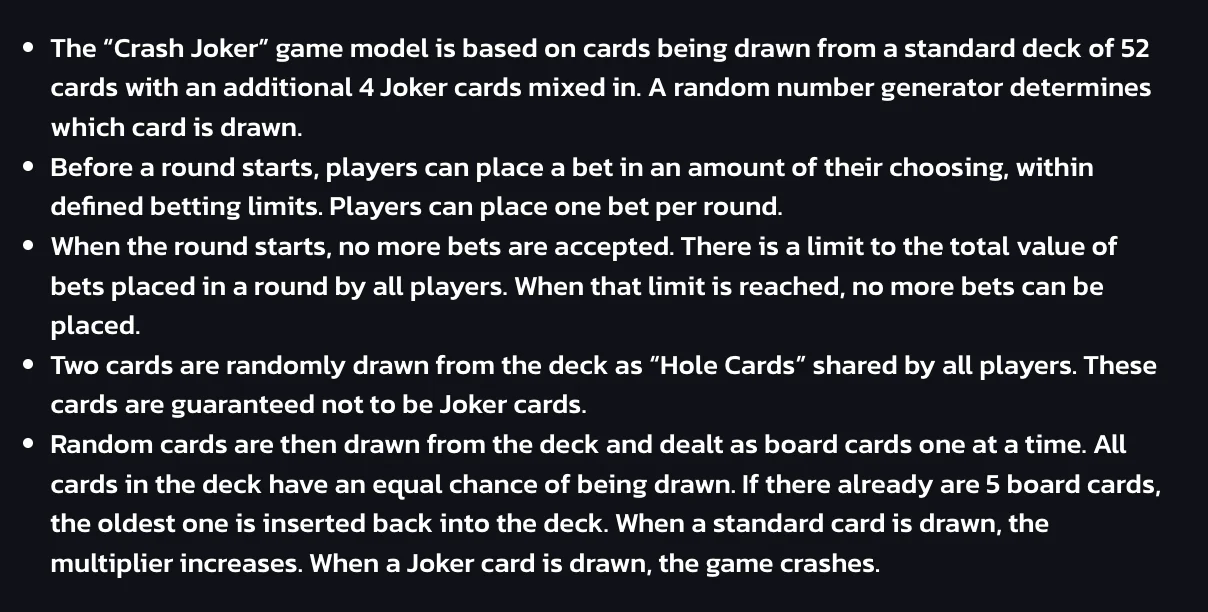
Crash Joker uses poker patterns as bonus triggers, but players do not build private hands or bluff. The cards are shared. Four of a Kind means four cards of one rank. A Straight Flush is a sequence of consecutive ranks in one suit. When either qualifying pattern forms before a Joker, active players enter Vault Break.
| Event | Base-round result | What to check |
|---|---|---|
| Safe card | Multiplier rises | Current cash-out value |
| Joker | Active wager crashes | Whether a prior cash-out completed |
| Four of a Kind | Vault Break trigger | You must still be active |
| Straight Flush | Vault Break trigger | Bonus rules shown in game |
Suppose the stake is $5 and the display reaches 2.20×. A successful cash-out at that point is $11 gross: the $5 stake plus $6 gross profit. Remaining active might produce a higher multiplier or Vault Break, but the next card can also be a Joker and reduce the live value to zero.
Next, read the risk-based Crash Joker strategy page or check how to verify an operator and game session.
The amount field is editable and the bet can be queued. This is the last sensible moment to confirm currency, stake and automatic settings. A balance shown in dollars does not necessarily mean the account uses US dollars; some interfaces convert values. Check the cashier currency rather than reading it from a screenshot.
An accepted state should appear before the cards begin. If the interface does not confirm the wager, do not press repeatedly: duplicate requests may create more exposure than intended. Use the operator's bet history to settle any dispute.
The current multiplier is the gross factor applied to the stake if Cash Out completes. The table may display hole cards and board cards using poker terminology, but the cards are shared. There is no private hand-selection decision. The relevant actions are to leave or remain active.
A click and a completed settlement are different states. On a poor connection, look for the confirmation and transaction record. Screenshots of an animation are weaker evidence than the account ledger. If the result is disputed, stop placing new bets and contact the operator with round ID and time.
The active round ends. Increasing the next stake does not repair that loss; it starts a new wager with more money exposed. This is where a prewritten flat-stake rule blocks the most common emotional mistake.
The conversion example does not recommend a larger bet. More rolls come from more money at risk. If the operator uses another currency, confirm how fractions and conversion are handled because the public explanation uses dollars.
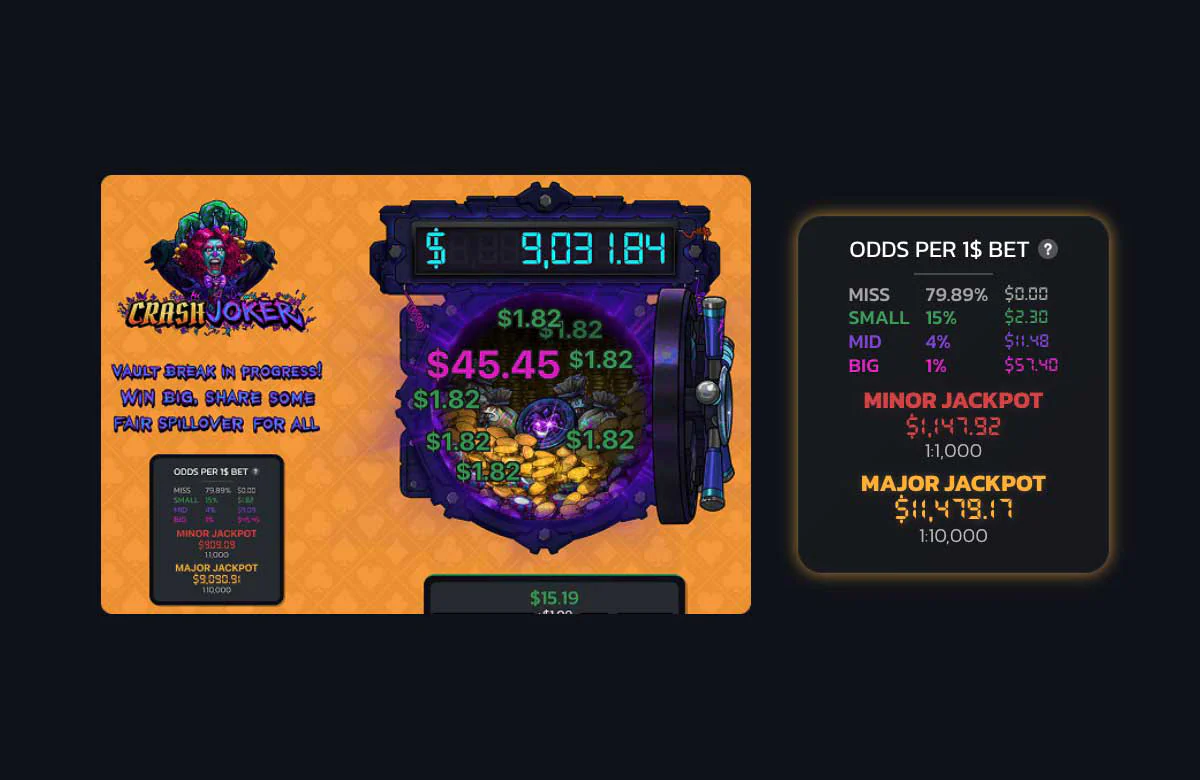
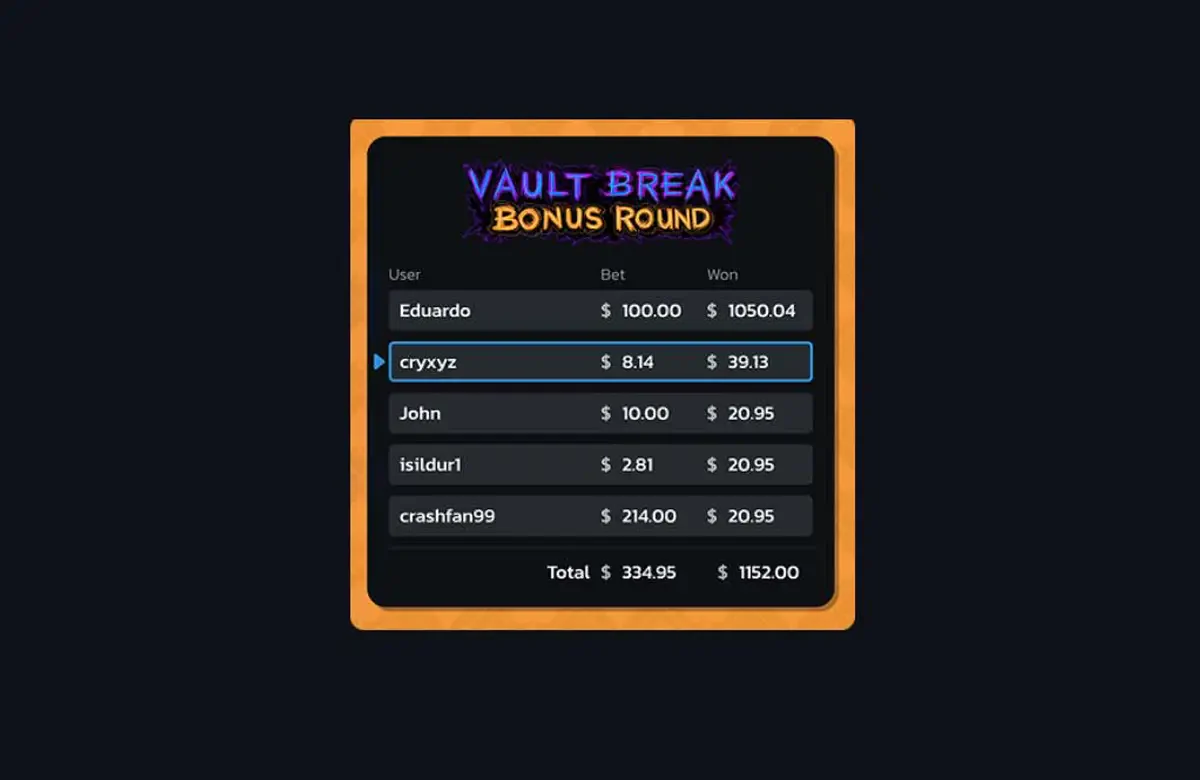
Crash Joker is easy to operate once these states are separated. The difficult part is not the button layout; it is accepting that every active round can finish before the chosen target.
Real-money play adds an operational layer that a rules summary cannot remove. The server result normally controls when the animation and account ledger disagree. Before playing, locate the round-history page and learn where the round identifier appears. If Cash Out seems late, record the time, displayed multiplier, network state and subsequent ledger entry. Do not start another round while trying to understand the first one.
A screenshot can support a complaint, but it does not show every server event. Write a short chronological description and use the operator's formal complaint route. If the response is unsatisfactory, the terms should identify an alternative dispute body or regulator route where applicable. Never pay an unofficial recovery service that promises to alter a settled result.
A rank is the number or face shown on a card: two through ten, Jack, Queen, King and Ace. A suit is hearts, diamonds, clubs or spades. Four of a Kind uses four cards of the same rank. A Straight Flush uses consecutive ranks from one suit. The official Crash Joker material names those two patterns as Vault Break triggers. It does not require the player to choose which cards count.
The four Jokers are different from wild cards in ordinary poker. In this game they are the crash condition. They are not substitutes that complete the bonus hand. That distinction makes standard poker strategy irrelevant: there is no discard, draw, fold, bluff or opponent-specific decision.
A stop-on-win amount is not a profit engine. It simply closes a batch after a selected result. Likewise, stop-on-loss limits exposure only if it is set before play and not immediately raised.
| Stake | Cash-out multiplier | Gross settlement | Gross profit |
|---|---|---|---|
| $1 | 1.50× | $1.50 | $0.50 |
| $2 | 2.25× | $4.50 | $2.50 |
| $5 | 3.00× | $15.00 | $10.00 |
| $10 | 1.20× | $12.00 | $2.00 |
These examples use stake multiplied by the displayed factor. They are arithmetic examples, not predictions. Currency conversion, operator rounding, bonus-balance restrictions or other disclosed rules may affect an account ledger.
On a small screen, confirm that Cash Out is not covered by a browser bar or sticky notification. Use wide-screen orientation only if the operator supports it and buttons remain labelled. Players who rely on screen readers or switch controls should test navigation without money because a rapidly changing interface can be difficult to operate. If a control cannot be identified reliably, the correct response is not to stake.
Branding, operator availability, bet limits, currencies and promotional terms can change. The core rule description is still something to recheck inside the current game version. A guide dated 2026 should not override newer in-game information. Our page date shows when the sources were reviewed, not a promise that every operator configuration remains identical.
Before using money, describe the round aloud in one sentence: “My stake is fixed; I cash out only under the plan; a Joker can remove the live amount; the Vault is optional.” Then identify the balance, stake, Cash Out, Auto Bet, Auto Cashout and history controls on screen. If any control is ambiguous, stop and use the help panel.
Run through a hypothetical loss. The next action should be closing or placing the same planned unit, never increasing it. Run through a hypothetical large win too. The end time and deposit limit stay unchanged. Planning both outcomes prevents the result itself from rewriting the session.
Finally, check sound and visual cues. They can call attention to a state but should not be the only evidence. A muted tab, reduced-motion setting or connection delay may suppress them. Read the labelled control and transaction status. Accessibility is part of safe operation, not a cosmetic extra.
The game does not reward card counting, bluffing or hand selection. The useful skills sit outside the RNG: reading the current state, understanding gross return, keeping the stake fixed, recognising a completed cash-out, preserving transaction records and leaving when a limit arrives. Those skills can reduce avoidable mistakes. They cannot force a safe card.
Count of documented interface actions versus random game events in the core round.
Measured in items; zero means “not provided or not applicable,” not zero risk.
The game uses 56 cards: a normal 52-card deck plus four Jokers.
No. The stake must be placed during the pre-round window.
Yes. Official operator rules describe shared hole and board cards for all players in the round.
There is no universally correct point. A lower preset target reduces time exposed but does not guarantee profit.
Only players who remain active when Four of a Kind or a Straight Flush appears.
No. In Crash Joker, a Joker ends the active base-game wager rather than substituting for another card.
Keep the round ID, time, screen capture and account ledger, then use the operator complaint process.